
South Carolina DUI Checkpoints:
Your Rights During Labor Day Weekend
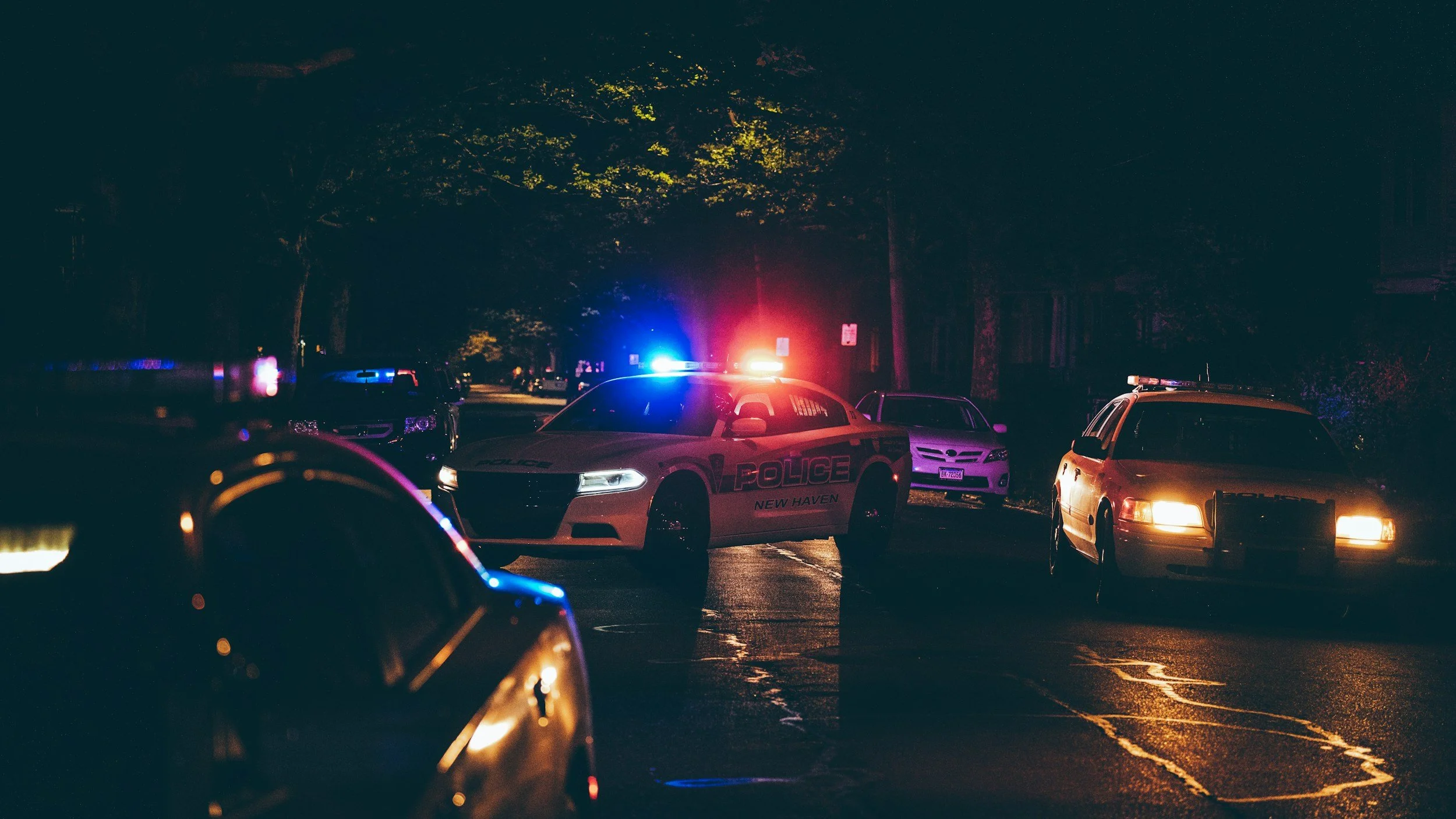
Labor Day weekend in South Carolina means more cookouts, more trips to the lake or beach — and more DUI enforcement. State troopers and local agencies participate in national campaigns like Drive Sober or Get Pulled Over and state initiatives such as Sober or Slammer, which bring extra patrols and sobriety checkpoints to roads across the Lowcountry. Law enforcement is looking for impaired drivers, but a DUI arrest still requires the State to prove specific legal elements. Understanding the process can help you protect your rights if you’re stopped.
Are DUI Checkpoints Legal in South Carolina?
Yes. DUI checkpoints (sobriety checkpoints or roadblocks) are legal in South Carolina, but they must follow specific constitutional guidelines to be valid. Supervisory officers — not individual patrol officers — must decide to set up the checkpoint and select locations based on legitimate public safety considerations rather than the unfettered discretion of a single officer. Drivers must be stopped according to a neutral pattern (for example, every third vehicle) rather than based on one officer’s personal choices, and checkpoints must be reasonably visible with advance warning to approaching drivers. The purpose of these requirements is to prevent arbitrary stops and ensure that checkpoints are conducted according to a predetermined plan.
Can You Legally Avoid a Checkpoint?
You’re allowed to turn onto another road or make a lawful maneuver to avoid a checkpoint — simply choosing a different route is not illegal by itself. Officers cannot stop you merely because they believe you avoided a checkpoint; they still need a lawful basis for a stop, such as an observed traffic violation or reasonable suspicion of another offense. If you break a traffic law while trying to avoid the checkpoint (like making an illegal U-turn), an officer can stop you based on that violation and may still evaluate you for impairment if they observe signs of DUI.
What You Must Do at a DUI Checkpoint
If you drive through a checkpoint and an officer directs you to stop, you must stop, and you’re required to provide your driver’s license, vehicle registration, and proof of insurance when lawfully requested. South Carolina law requires drivers to carry required documentation and provide it when lawfully requested by an officer; refusing to do so can create an immediate legal problem unrelated to DUI.
Your Right to Remain Silent
Beyond basic identification, your obligations narrow considerably. You are not required to answer incriminating questions like “Have you been drinking?” or “How much have you had tonight?”. You can politely decline to answer by saying something like, “I prefer not to answer questions without an attorney,” while remaining calm and respectful. You should not lie to an officer — making false statements can create separate problems — but you also do not have to provide answers that may incriminate you.
Field Sobriety Tests: Voluntary, With No Automatic License Suspension
Field sobriety tests — such as the walk-and-turn, one-leg stand, or horizontal gaze nystagmus (HGN) test — are not mandatory in South Carolina; you may decline to participate in them. These tests are subjective and can be difficult to perform even if you’re sober, especially at night, on uneven surfaces, or if you have medical conditions. Importantly, South Carolina law does not impose the same automatic license-suspension consequences for refusing roadside field sobriety tests that apply to refusing the post-arrest chemical test — but refusing may lead to further investigation and can result in an arrest if the officer believes there is enough other evidence of impairment.
Breath Tests and South Carolina’s Implied Consent Law
Chemical tests — typically the breath test on a Datamaster at the station after arrest — are different from roadside field sobriety tests. Under South Carolina’s implied consent law (Section 56-5-2950), if you drive on South Carolina roads and an officer has probable cause to believe you’re driving under the influence, you’re considered to have already consented to a breath, blood, or urine test to check for alcohol or drugs. You can still refuse the official breath test, but refusal carries serious administrative consequences separate from the DUI charge itself, including:
Immediate driver’s license suspension, commonly six months for a first refusal, with longer periods depending on prior alcohol-related history.
Separate administrative suspensions that may apply in certain high-BAC cases, even without a refusal.
Possible requirements to enroll in and complete South Carolina’s Alcohol and Drug Safety Action Program (ADSAP), depending on the circumstances and the administrative/criminal outcome.
The refusal being used as evidence in court, with prosecutors often arguing that refusal shows “consciousness of guilt”.
These suspensions are handled through the DMV and can take effect even if the criminal DUI case is later dismissed or reduced, which can surprise many drivers.
Requesting an Administrative Hearing After a Breath Test Refusal
A DUI-related license suspension is not necessarily permanent or unchallengeable. If your license is suspended under South Carolina’s implied consent law — either because you refused the breath test or because your BAC was at or above certain statutory thresholds — you have the right to request an administrative hearing with the Office of Motor Vehicle Hearings (OMVH) to challenge the suspension. Key points include:
You generally have 30 days from the date of the Notice of Suspension to request the hearing; if the OMVH does not receive your request and the filing fee within that time, you lose the right to contest the suspension.
The hearing request typically uses the original Notice of Suspension/implied consent rights form you received in the Datamaster room, along with the required filing fee.
Once you request the hearing, you may be eligible for a Temporary Alcohol Restricted License (TARL) that allows you to drive without route restrictions (other than no alcohol) while you await the hearing decision.
The implied consent hearing is a separate civil proceeding focused on whether the arrest and testing complied with South Carolina’s implied consent laws; it is distinct from your criminal DUI case and has its own deadlines and consequences.
If you win the administrative hearing, the implied consent suspension is lifted; if you lose or do not request a hearing, the suspension remains in place, and you’ll need to complete requirements such as ADSAP and, in some cases, ignition interlock before full reinstatement.
Common Mistakes People Make After a DUI Stop
Volunteering detailed information about where they were and how much they drank, beyond basic identification.
Performing roadside field sobriety tests without understanding they are voluntary and can be used against them.
Ignoring or delaying action on implied consent suspensions and missing the 30-day hearing deadline.
Posting about the incident on social media, giving prosecutors and insurers more material to review.
Assuming the criminal DUI case and the license-suspension case are the same proceeding, when they are actually separate.
A DUI Arrest Is Not a DUI Conviction
Being arrested for DUI at a checkpoint or after a traffic stop does not mean you are guilty. The State must prove its case beyond a reasonable doubt, and every DUI case turns on specific facts: why the vehicle was stopped, how the checkpoint or traffic stop was conducted, whether field sobriety tests were administered properly, how the breath test was handled, and whether evidence was collected and preserved according to South Carolina law. Many DUI defenses focus on these details.
Frequently Asked Questions
How long does a DUI checkpoint stop usually take? A checkpoint stop should generally be brief — often just long enough for officers to check documentation, make a quick observation, and decide whether any further investigation is necessary. If they develop reasonable suspicion or probable cause, the stop can become longer while they investigate.
Can police search my car at a DUI checkpoint? A checkpoint alone does not automatically give officers the right to search your vehicle. To search, officers generally need additional legal justification, such as your consent, probable cause (for example, visible contraband or strong odor of alcohol or drugs), or specific circumstances recognized under search-and-seizure law.
Can I refuse a breathalyzer at a DUI checkpoint? You can refuse the official breath test after arrest, but doing so typically results in an immediate license suspension (commonly six months for a first refusal, longer with prior offenses), and may require ADSAP and potentially ignition interlock as part of reinstatement.
Will turning away from a checkpoint get me in trouble? Simply choosing a different legal route is allowed, but making illegal maneuvers to avoid a checkpoint gives officers a lawful reason to stop you, after which they may check for signs of DUI.
Can a DUI checkpoint arrest be dismissed? It depends on the facts. Possible issues include whether the checkpoint was properly planned and conducted, whether the stop itself was lawful, whether field sobriety and chemical tests followed required procedures, and whether the State can prove every element of the offense.
Do I need a lawyer for a first DUI in South Carolina? Even a first DUI can involve criminal penalties, license consequences, insurance issues, and long-term effects on your record. A consultation can help you understand the options and defenses available in your specific case.
Should I talk to a DUI lawyer before my court date? Yes. DUI cases involve both criminal charges and administrative license consequences, with strict deadlines for implied consent hearings and potential long-term impact on your record and driving privileges.
Stegall Law represents clients facing criminal charges throughout the South Carolina Lowcountry. DUI cases require careful review of the traffic stop or checkpoint, field sobriety testing, chemical testing procedures, and the State’s evidence. Every case deserves a thorough evaluation based on its specific facts.
Labor Day should be about enjoying the long weekend safely, not about losing your license or facing criminal charges. If you’ve been stopped or arrested at a DUI checkpoint anywhere in Summerville, Goose Creek, Hanahan, North Charleston, Mount Pleasant, Moncks Corner, or across Berkeley, Charleston, and Dorchester Counties, Stegall Law can help you understand your rights, challenge license suspensions, and evaluate your options in both the criminal and administrative parts of your case.
Learn more about how Stegall Law can help with DUI defense in Summerville and the Lowcountry.
Disclaimer: This article is for general informational purposes only and is not legal advice. Every case is different, and reading this article does not create an attorney-client relationship. If you have questions about your specific situation, consult a qualified South Carolina attorney.