
Can Police Search My Car Without a Warrant in South Carolina?
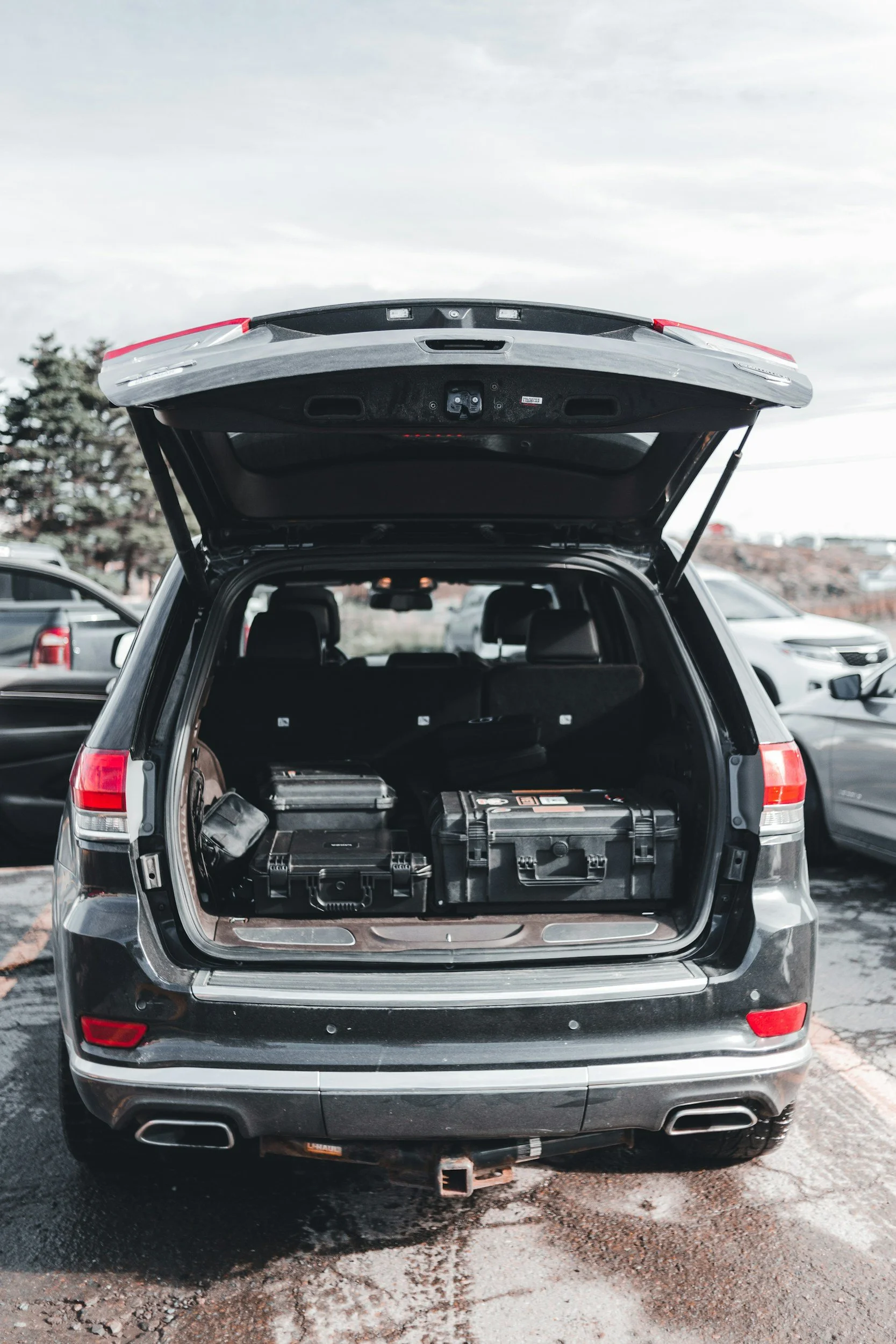
You are pulled over for a broken taillight. The officer takes your license, comes back, and asks, “Mind if I take a look inside the car?” Most people are not sure whether they can say no, or whether the officer even needs to ask.
The short answer is that police often can search a vehicle without a warrant, but only in specific situations. Our DUI checkpoint post touched on this briefly. Here is the full picture for any traffic stop, because knowing where those lines are can make a real difference if a search later leads to criminal charges.
The General Rule: Warrants are Required, With Exceptions.
The Fourth Amendment to the U.S. Constitution protects against unreasonable searches and seizures, and the South Carolina Constitution adds its own protection against unreasonable invasions of privacy. The South Carolina Supreme Court has long held that searches conducted without a warrant are considered unreasonable unless an exception applies, and the State carries the burden of proving that one does.
Vehicles, however, are treated differently from homes. Because cars can be driven away and are subject to extensive regulation, courts have recognized several exceptions that allow warrantless vehicle searches.
The Main Exceptions
South Carolina courts recognize five exceptions that come up most often in vehicle cases: probable cause (often called the automobile exception), consent, plain view, search incident to arrest, and inventory searches. Each has its own requirements and its own limits.
Probable Cause: The Automobile Exception
This is the most common basis for a warrantless vehicle search. In State v. Weaver (2007), the South Carolina Supreme Court confirmed that if officers have probable cause to believe a vehicle contains evidence of a crime, they do not need a warrant, so long as the search is based on facts that would have justified issuing one. Probable cause is a higher standard than the “reasonable suspicion” needed to stop a car in the first place. It means there is a fair probability that contraband or evidence will be found, based on the facts the officer can actually point to. The permissible scope of the search depends on what officers have probable cause to believe is in the vehicle and where that evidence could reasonably be located.
Consent
If you agree to a search, officers generally do not need any other justification. That is why officers often ask. You are not required to say yes.
South Carolina courts have also recognized that consent can be invalid if it was obtained during a detention that should already have ended. In State v. Tindall (2010), the officer finished the license check and said he would issue a warning, then kept the driver on the roadside and asked for consent to search. The court held the continued detention was unlawful without reasonable suspicion of other criminal activity, and the drugs found were suppressed.
Plain View
If an officer is lawfully standing beside your car during a stop and sees evidence of a crime in open view, such as drugs on the passenger seat, the officer may seize it without a warrant. The key limits are that the officer must be in a place they are legally allowed to be, and the illegal nature of the item must be immediately apparent. An officer cannot move things around or open containers to bring something “into view.”
Search Incident to Arrest
In Arizona v. Gant (2009), the U.S. Supreme Court limited this exception. Police may search the passenger compartment after arresting a recent occupant only if the person could access the vehicle at the time of the search, or if it is reasonable to believe the vehicle contains evidence of the offense that led to the arrest. An arrest for driving with a suspended license, for example, usually does not by itself justify searching the car for drugs.
Inventory Searches
When a vehicle is lawfully towed and impounded, officers may inventory its contents following standardized department procedures. In State v. Miller (2018), the South Carolina Supreme Court upheld an inventory search conducted under department policy after the driver’s arrest. Inventory searches must be done in good faith, not as a cover for a search officers could not otherwise justify.
Can Police Bring a Drug Dog to a Traffic Stop?
A dog sniff around the outside of a car is not considered a “search” on its own. But in Rodriguez v. United States (2015), the U.S. Supreme Court held that officers cannot extend a traffic stop beyond the time needed to handle the traffic violation in order to conduct a dog sniff, unless they have reasonable suspicion of other criminal activity. Once the tasks tied to the traffic stop are completed, or reasonably should have been, the stop is supposed to end.
What About the Smell of Marijuana?
Marijuana remains illegal in South Carolina, and South Carolina courts have generally treated the odor of marijuana as a factor supporting probable cause to search a vehicle. Legal hemp, which can look and smell much like marijuana, has made this issue more complicated in courts around the country. A 2025 South Carolina Senate bill (S. 177) proposed barring stops and searches based solely on the scent of marijuana or hemp, but it had not been enacted at the time this article was written. This is an evolving area, and the specific facts of each stop matter.
What You Should Do During a Traffic Stop
Pull over safely, turn on your interior light at night, and keep your hands visible.
Provide your license, registration, and proof of insurance when asked.
Be polite and calm. Arguing on the roadside rarely helps and can escalate the situation.
If asked for permission to search, you may clearly and politely say, “I do not consent to any searches.”
Do not physically resist or interfere, even if you believe a search is improper. That issue can be raised later in court.
If you are unsure whether you are being detained, you may ask, “Officer, am I free to go?”
After the stop, write down what happened while it is fresh: the time, location, what was said, and how long the stop lasted.
What Happens If a Search Was Illegal
If officers search a vehicle without a valid warrant or a recognized exception, a defense attorney can file a motion to suppress. If the court agrees the search was unlawful, the evidence found during the search, and sometimes evidence that came from it, may be excluded from the case. In some situations, that can lead to reduced charges or a dismissal.
Whether a search was lawful often depends on small details: why the car was stopped, how long the stop lasted, exactly what the officer saw or smelled, and what was said about consent. Body camera and dash camera footage can be critical, which is why it is important to involve an attorney early.
Bart Stegall brings a unique vantage point to these cases, having served as a prosecutor with the Ninth Circuit and Thirteenth Circuit Solicitor’s Offices and as a Judge Advocate with the South Carolina National Guard. That experience means understanding how prosecutors evaluate the legality of a stop and search from the very beginning of a case.
Frequently Asked Questions
Can I refuse a search of my car in South Carolina?
Yes. You have the right to decline consent to a search. Refusing consent does not by itself give officers probable cause. Officers may still search if another exception applies, but your refusal preserves your ability to challenge the search later.
Can police search my trunk without a warrant?
If officers have probable cause to believe evidence of a crime is in the vehicle, the automobile exception can extend to any part of the vehicle, including the trunk and containers, where that evidence could be found. A search incident to arrest, by contrast, is generally limited to the passenger compartment.
Can police search my phone if they search my car?
Generally no. In Riley v. California (2014), the U.S. Supreme Court held that police usually need a warrant to search the digital contents of a cell phone, even after an arrest.
Can passengers be searched too?
Passengers have their own Fourth Amendment rights. Whether officers can search a passenger, or a passenger’s belongings, depends on the specific facts and the legal basis for the search.
Should I talk to a lawyer if drugs or a weapon were found in my car?
Yes. Charges that come from a vehicle search often turn on whether the search was lawful. A defense attorney can review the stop, the search, and the available video to determine whether there are grounds to challenge the evidence.
The Bottom Line
Police in South Carolina can search a vehicle without a warrant, but only when a recognized exception applies. You have the right to decline consent, and an officer’s authority to hold you at a traffic stop has limits. If a search crossed those lines, the evidence may not be usable against you.
Stegall Law represents people facing criminal and traffic charges throughout the South Carolina Lowcountry, including Dorchester, Berkeley, and Charleston Counties. Cases that begin with a vehicle search deserve a careful review of the stop, the search, and the State’s evidence. If you have been charged after a search of your car, contact Stegall Law to discuss your options.
Disclaimer: This article is for general informational purposes only and is not legal advice. Every case is different, and reading this article does not create an attorney-client relationship. If you have questions about your specific situation, consult a qualified South Carolina attorney.
Sources
South Carolina Summary Court Judges Bench Book, Criminal (exceptions to the warrant requirement): https://www.sccourts.org/summaryCourtBenchBook/HTML/CriminalC.htm
State v. Peters, 271 S.C. 498, 248 S.E.2d 475 (1978) (warrantless searches per se unreasonable absent an exception): https://law.justia.com/cases/south-carolina/supreme-court/1978/20787-1.html
State v. Weaver (S.C. 2007) (automobile exception): https://law.justia.com/cases/south-carolina/supreme-court/2007/26366.html
State v. Tindall (S.C. 2010) (consent after unlawfully prolonged detention): https://law.justia.com/cases/south-carolina/supreme-court/2010/26861.html
State v. Miller (S.C. 2018) (inventory search): https://law.justia.com/cases/south-carolina/supreme-court/2018/27798.html
Arizona v. Gant, 556 U.S. 332 (2009): https://supreme.justia.com/cases/federal/us/556/332/
Rodriguez v. United States, 575 U.S. 348 (2015): https://supreme.justia.com/cases/federal/us/575/348/
Riley v. California, 573 U.S. 373 (2014) (cell phone searches): https://supreme.justia.com/cases/federal/us/573/373/
S. 177 (2025–2026 session), proposed limits on marijuana and hemp odor as a basis for stops and searches: https://www.scstatehouse.gov/sess126_2025-2026/bills/177.htm